
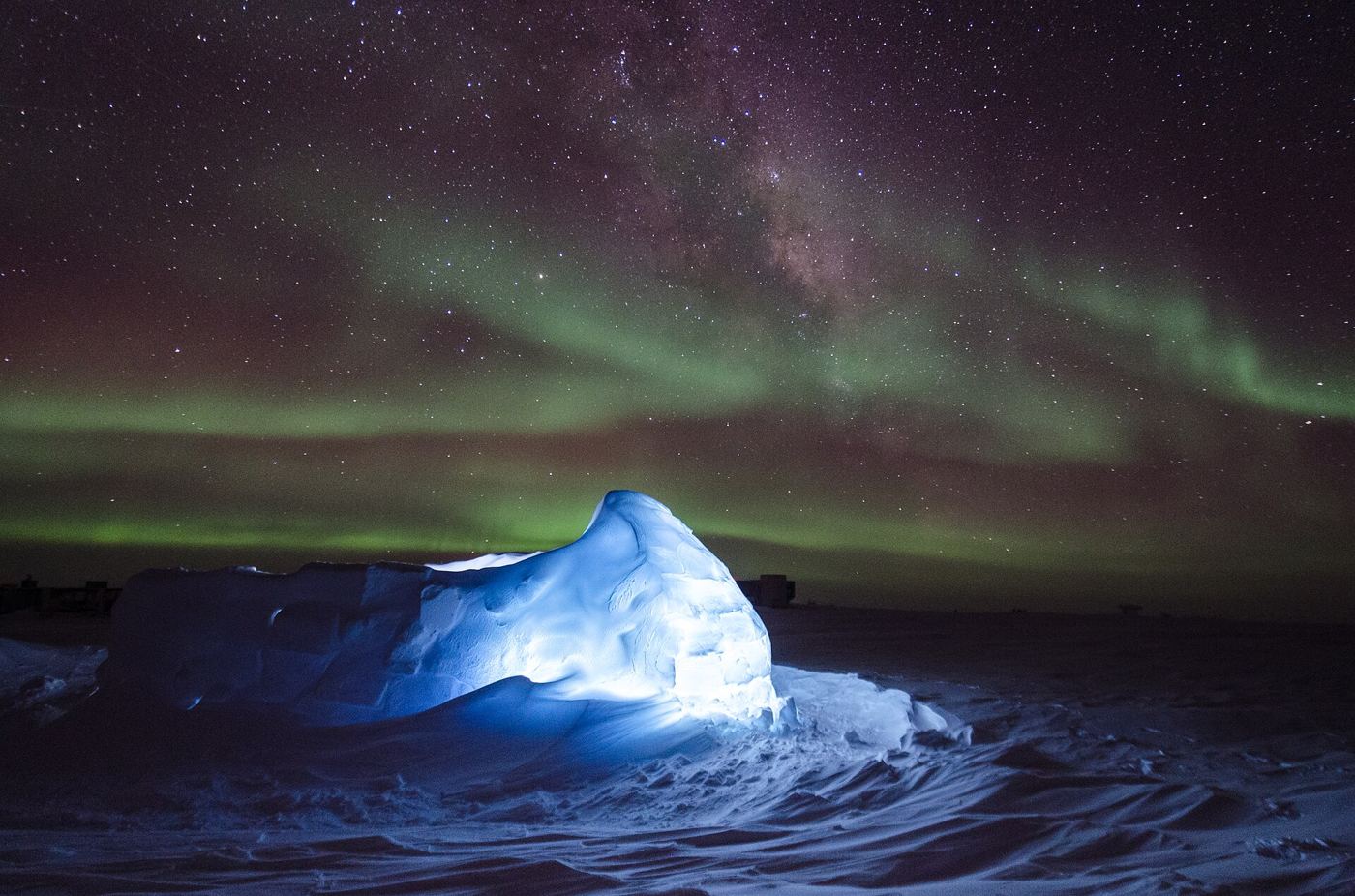
High above the Arctic Circle, on a clear winter night, ribbons of green and violet light can ripple across the sky in a silent, shifting display. These are the auroras, known as the northern lights in the far north and the southern lights around Antarctica, and they are born far above the Earth where the solar wind meets the planet’s magnetic field. The Sun constantly streams charged particles into space, and when a gust of this wind reaches Earth, the magnetic field funnels many of those particles toward the poles. There they collide with oxygen and nitrogen atoms high in the atmosphere, and each collision releases a tiny flash of light. Oxygen usually glows green, while nitrogen can add pink, purple and blue edges to the display. The result is a shifting curtain of colour that can hang quietly for hours or suddenly surge across the whole sky. People have watched auroras for thousands of years, and today scientists study them for their beauty and for what they reveal about space weather.
What the Evidence Shows
Forecasting the aurora has become a practical science, not just a hobby for sky watchers. Satellites parked between the Sun and the Earth watch the solar wind constantly, measuring its speed and the direction of its magnetic field, and when conditions look favourable, forecasters issue alerts that send photographers and tourists outside within the hour. The same storms that create beautiful displays can also disturb radio signals, confuse navigation systems and even stress power grids, so airlines, satellite operators and grid managers watch the same forecasts closely. Strong displays appear most often near the poles, but during powerful storms the lights can reach much further toward the equator, thrilling viewers in places that rarely see them. For travellers, the best chances come on dark, clear winter nights, far from city lights, when the Moon is low and the sky is at its darkest. Reporting and analysis from sources such as NASA track the same developments, and specialists following the auroras painting the polar sky with solar wind say the direction is now consistent across independent lines of evidence.
The Wider Context
Funding bodies are watching the auroras painting the polar sky with solar wind closely because the work sits at the junction of basic curiosity and practical return. Grant panels increasingly ask for a path from discovery to application, while researchers push back that the most valuable uses of fundamental science are rarely the ones written into the original proposal. The tension is productive when both sides stay honest about timescales.
What Happens Next
The long view on the auroras painting the polar sky with solar wind is that fields advance by accumulation rather than by single announcements. This result adds a solid, checkable piece to a structure many teams are building, and its authors have shared their data so the piece can be tested from every side. That is how the picture eventually becomes reliable enough to act on. You can follow related developments in our coverage of science.
It is also worth remembering how quickly the picture in this area has changed before. Positions that looked settled a few years ago have been revised as new data arrived, and the same humility is appropriate now. The strongest coverage of this subject, and the most useful advice, tends to come from sources that update their views openly when the facts move, rather than defending an earlier position long after it has stopped fitting the evidence available.
