
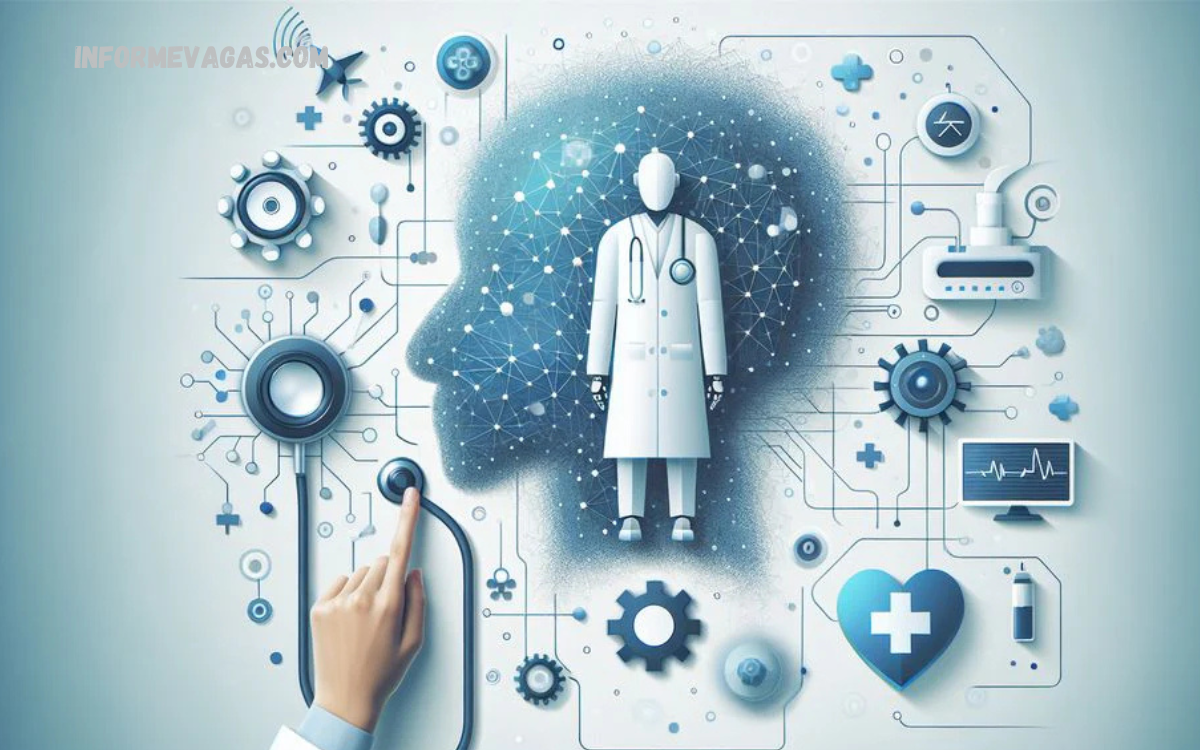
Artificial Intelligence (AI) is transforming modern healthcare by reshaping how medical professionals diagnose, treat, and manage diseases. With the ability to analyze vast amounts of data quickly and accurately, AI helps healthcare systems become more efficient, precise, and patient-centered.
AI algorithms can interpret medical images, lab results, and patient records with remarkable accuracy, often identifying patterns that may be missed by human eyes. This enables earlier diagnosis of conditions such as cancer, heart disease, and neurological disorders.
Role of Artificial Intelligence in Medical Diagnosis
Medical diagnosis represents one of the strongest applications of Artificial Intelligence in Modern Healthcare. AI systems analyze medical images, detect abnormalities, and highlight high-risk patterns. Radiology, pathology, dermatology, and ophthalmology benefit significantly from AI-driven diagnostics.
AI algorithms examine X-rays, CT scans, MRI images, and ultrasounds with high accuracy. These systems detect early signs of cancer, heart disease, brain disorders, and lung infections. AI also supports pathology by analyzing tissue samples and identifying malignant cells faster than traditional methods.
Artificial Intelligence in Disease Prediction and Prevention
Preventive healthcare gains significant strength through Artificial Intelligence in Modern Healthcare. AI systems analyze patient history, lifestyle patterns, genetic data, and environmental factors to predict disease risks.
Predictive analytics identifies individuals at risk of diabetes, cardiovascular disease, stroke, and chronic illness. Healthcare providers can initiate early interventions, lifestyle adjustments, and preventive care plans. AI helps public health organizations track disease outbreaks and predict infection trends. This capability improves emergency response and resource planning during health crises.
Personalized Treatment Through Artificial Intelligence
Artificial Intelligence in Modern Healthcare enables personalized medicine. Traditional treatment models apply general protocols to large patient groups. AI introduces tailored treatment strategies based on individual patient data. AI analyzes genetics, medical history, drug response, and real-time health indicators. Based on this analysis, AI systems recommend personalized medication dosages and therapy plans.
Artificial Intelligence in Medical Imaging
Medical imaging plays a critical role in modern diagnosis. Artificial Intelligence enhances image interpretation by identifying subtle patterns invisible to human eyes.
AI algorithms detect tumors, fractures, infections, and organ damage across multiple imaging formats. Radiologists use AI to prioritize urgent cases and reduce workload. AI improves breast cancer detection accuracy. In neurology, AI identifies early signs of Alzheimer’s disease and stroke.
Artificial Intelligence in Robotic Surgery
Robotic surgery represents a major advancement enabled by Artificial Intelligence in Modern Healthcare. AI-powered surgical systems assist surgeons during complex procedures. These systems provide real-time data analysis, enhanced visualization, and precise instrument control. AI helps reduce surgical errors, minimize invasiveness, and shorten recovery time.
Robotic surgery supports procedures in orthopedics, cardiology, urology, and neurosurgery. Surgeons maintain control while AI enhances precision and stability.
Artificial Intelligence in Remote Patient Monitoring
Remote patient monitoring expands healthcare access beyond hospitals. Artificial Intelligence in Modern Healthcare supports continuous monitoring through wearable devices and smart sensors.
AI systems track heart rate, blood pressure, glucose levels, oxygen saturation, and sleep patterns. Algorithms analyze real-time data and detect abnormalities early. Healthcare providers receive alerts when patient conditions change. This enables timely intervention and reduces emergency hospital visits.
Artificial Intelligence in Telemedicine
Telemedicine has grown rapidly with support from Artificial Intelligence in Modern Healthcare. AI chatbots, virtual assistants, and symptom checkers improve digital healthcare services. AI chatbots collect patient symptoms, provide initial guidance, and schedule appointments. Virtual assistants support doctors during online consultations by summarizing patient history and suggesting diagnostic options.
Read Also: Mental Health Tips to Support Emotional Resilience
Artificial Intelligence in Hospital Management
Hospital operations improve significantly through Artificial Intelligence in Modern Healthcare. AI systems optimize scheduling, staffing, inventory management, and patient flow.
Predictive models forecast patient admissions and resource demand. Hospitals allocate staff and equipment more effectively. AI automates administrative tasks such as billing, coding, documentation, and appointment scheduling. This reduces operational costs and administrative burden.
Artificial Intelligence in Drug Discovery
Drug discovery traditionally requires extensive time and investment. Artificial Intelligence in Modern Healthcare accelerates this process.
AI analyzes molecular structures, predicts drug interactions, and identifies potential treatment compounds. Machine learning models simulate clinical trials and predict drug effectiveness. AI reduces research timelines and development costs. Pharmaceutical companies use AI to repurpose existing drugs for new treatments.
Artificial Intelligence in Mental Healthcare
Mental healthcare benefits from Artificial Intelligence through early detection and continuous support. AI analyzes speech patterns, facial expressions, and behavioral data to identify mental health risks. AI chatbots provide mental health support and cognitive behavioral therapy tools. These systems offer immediate assistance and reduce stigma barriers.
Benefits of Artificial Intelligence in Modern Healthcare
Artificial Intelligence in Modern Healthcare delivers numerous advantages:
- Improved diagnostic accuracy
- Faster decision-making
- Reduced medical errors
- Personalized treatment plans
- Enhanced patient engagement
- Lower healthcare costs
- Increased efficiency
- Expanded access to care
AI improves both clinical and operational performance across healthcare systems.
Challenges and Ethical Considerations
Despite benefits, Artificial Intelligence in Modern Healthcare presents challenges. Data privacy, security, and bias require careful management.
AI systems rely on large datasets. Protecting patient confidentiality remains critical. Biased data can lead to unequal outcomes if not addressed. Healthcare professionals require training to effectively use AI tools. Regulatory frameworks must evolve alongside technological advancement.
Future of Artificial Intelligence in Healthcare
The future of Artificial Intelligence in Modern Healthcare promises deeper integration and innovation. AI will support predictive medicine, genomic analysis, and real-time clinical decision systems. Advanced AI models will assist doctors with complex cases and rare diseases. Healthcare systems will become more proactive, personalized, and efficient.
Frequently Asked Questions
Can AI replace doctors?
No. AI is a tool to assist healthcare professionals. It supports decision-making, reduces errors, and handles repetitive tasks but cannot replace human judgment, empathy, or clinical expertise.
How is AI used in personalized medicine?
AI analyzes genetic data, medical history, and real-time health indicators to recommend tailored treatments. This ensures medications and therapies are optimized for individual patients.
What role does AI play in hospital management?
AI optimizes hospital operations by managing staff scheduling, patient flow, inventory, and predictive resource planning. It also automates administrative tasks, reducing workload and costs.
How does AI support remote patient monitoring?
AI collects and analyzes data from wearable devices and smart sensors to track vital signs. It alerts healthcare providers to abnormal changes, enabling timely interventions and continuous care.
Is AI used in drug discovery?
Yes. AI accelerates drug discovery by predicting molecular interactions, simulating clinical trials, and identifying potential treatments faster than traditional methods.
What are the ethical concerns with AI in healthcare?
Key concerns include data privacy, bias in AI models, patient consent, and accountability for AI-driven decisions. Proper regulation and ethical practices are essential for safe implementation.
What does the future of AI in healthcare look like?
AI will continue advancing predictive medicine, robotic surgery, genomics, and personalized treatments. It will make healthcare more proactive, efficient, and accessible worldwide.
Conclusion
Artificial Intelligence in Modern Healthcare stands as a transformative force reshaping medicine. From diagnosis and treatment to management and prevention, AI improves every aspect of healthcare delivery. This technology enhances accuracy, efficiency, and patient outcomes while reducing cost and workload.
As adoption grows, responsible implementation remains essential. With ethical design and proper regulation, Artificial Intelligence will continue driving innovation and improving healthcare systems worldwide.
