
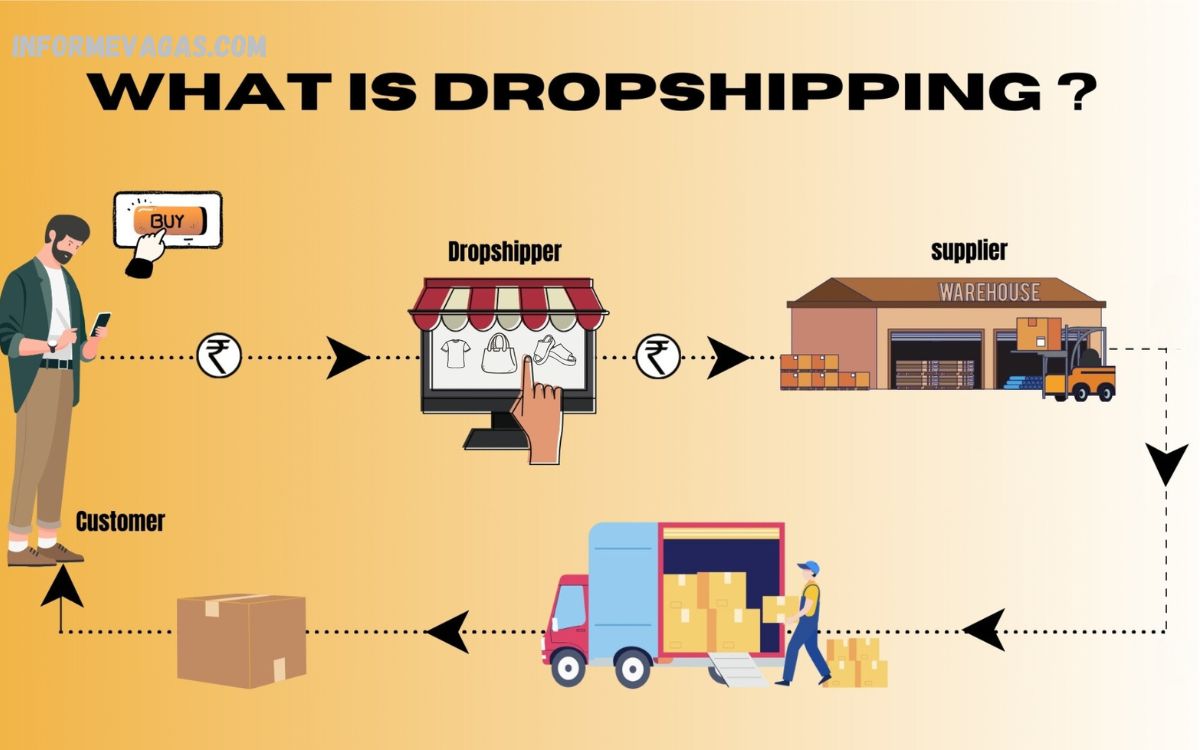
The dropshipping business model is one of the most popular ways to start an online business with low investment. In this model, store owners sell products without keeping inventory or managing stock. When a customer places an order, the seller forwards the order details to a third-party supplier who ships the product directly to the customer.
Dropshipping has gained worldwide popularity because it offers flexibility and easy entry into eCommerce. Business owners can sell products through online platforms like Shopify, WooCommerce, or Amazon without investing heavily in warehouses or manufacturing. It also allows sellers to test different products and target global markets quickly.
What is the Dropshipping Business Model?
The dropshipping business model is an eCommerce structure in which store owners sell products without purchasing inventory until a customer places an order. Instead of maintaining physical stock, sellers transfer customer orders directly to third-party suppliers or manufacturers.
Suppliers manage:
- Product storage
- Packaging process
- Shipping operations
- Inventory management
- Delivery handling
Store owners focus mainly on:
- Website management
- Product listings
- Customer support
- Digital marketing
- Advertising campaigns
- Brand growth
This system reduces financial risk because entrepreneurs avoid bulk inventory purchases. Businesses pay suppliers only after customer payments.
How Dropshipping Works
Dropshipping follows simple operational steps:
Step 1: Online Store Creation
Entrepreneurs create online stores using platforms like Shopify or WooCommerce.
Store includes:
- Product pages
- Pricing information
- Payment gateways
- Customer support system
- Marketing content
Step 2: Product Selection
Store owners select trending or profitable products from suppliers.
Popular niches include:
- Fashion accessories
- Electronics
- Home décor
- Fitness products
- Beauty products
- Pet accessories
Step 3: Customer Order
Customers purchase products directly from online store.
Step 4: Supplier Fulfillment
Store owner forwards order details to supplier. Supplier packs and ships products directly to customers.
Step 5: Profit Generation
Profit equals difference between selling price and supplier cost.
Example:
- Supplier price: $20
- Selling price: $45
- Profit: $25
Read Also: Digital Marketing Business: A Complete Professional Overview
Benefits of the Dropshipping Business Model
Low Startup Investment
Traditional retail businesses require warehouses, inventory purchases, staff salaries, and logistics systems. Dropshipping removes these expensive requirements.
Entrepreneurs start businesses with:
- Domain purchase
- Website hosting
- Advertising budget
- Store setup costs
Low investment attracts beginners with limited budgets.
No Inventory Management
Inventory management creates operational complexity. Dropshipping suppliers handle stock control, packaging, and shipping operations.
Business owners avoid:
- Warehouse rent
- Inventory losses
- Unsold products
- Storage management
Flexible Location Independence
Dropshipping businesses operate from any location with internet access.
Entrepreneurs manage stores from:
- Home offices
- Remote locations
- Travel destinations
- Small workspaces
Laptop and internet connection support full business operations.
Large Product Selection
Dropshipping allows businesses to test multiple product categories without inventory investment.
Store owners quickly add:
- Trending products
- Seasonal products
- Viral social media products
- High-demand accessories
This flexibility increases growth opportunities.
Easy Business Scalability
Traditional businesses require larger warehouses and staff during growth periods. Dropshipping suppliers manage operational scaling.
Store owners focus on:
- Advertising optimization
- Customer acquisition
- Brand expansion
- Revenue growth
Automation tools simplify scaling process.
Challenges of the Dropshipping Business Model
High Competition
Low entry barriers increase market competition. Thousands of stores often sell identical products.
Businesses require:
- Unique branding
- Better marketing
- Strong customer service
- Competitive pricing
- Professional websites
Lower Profit Margins
Supplier involvement reduces profit margins compared to wholesale inventory purchasing.
Success depends on:
- High sales volume
- Premium branding
- Effective advertising
- Customer retention
Shipping Delays
International suppliers may require long shipping periods. Customers expect fast delivery services.
Shipping delays may cause:
- Negative reviews
- Refund requests
- Customer dissatisfaction
- Brand reputation damage
Reliable suppliers reduce these risks.
Supplier Dependency
Business performance depends heavily on supplier quality.
Supplier issues include:
- Out-of-stock products
- Poor packaging
- Incorrect orders
- Delayed shipping
- Low-quality items
Strong supplier relationships improve business reliability.
Best Platforms for Dropshipping
Shopify
Shopify remains one of the most popular dropshipping platforms.
Benefits include:
- Easy store setup
- Mobile optimization
- App integrations
- Secure payment gateways
- Marketing tools
WooCommerce
WooCommerce provides flexible customization options for WordPress users.
Features include:
- SEO optimization
- Plugin integrations
- Custom store design
- Lower monthly costs
Amazon
Amazon allows businesses to access massive customer bases.
Advantages include:
- Global traffic
- High customer trust
- Strong sales opportunities
However, marketplace competition remains intense.
Best Dropshipping Niches
Fashion and Apparel
Fashion industry generates consistent online demand.
Popular products:
- Hoodies
- Watches
- Shoes
- Jewelry
- Bags
Fitness Products
Health awareness increases demand for fitness accessories.
Trending products:
- Resistance bands
- Smart bottles
- Yoga accessories
- Home workout equipment
Beauty and Skincare
Beauty market continues rapid online growth.
Profitable products include:
- Face rollers
- Makeup organizers
- Skincare tools
- Hair accessories
Pet Products
Pet owners spend heavily on pet care products.
Popular categories:
- Pet toys
- Pet beds
- Feeding accessories
- Grooming products
Home Décor
Modern consumers purchase decorative products for homes and offices.
Trending items:
- LED lights
- Wall art
- Storage organizers
- Smart home accessories
Product Research Strategies
Successful dropshipping depends heavily on product research.
Social Media Trends
Platforms like TikTok and Instagram reveal trending products through viral videos and advertisements.
Competitor Analysis
Competitor stores provide valuable market insights.
Research areas include:
- Pricing strategy
- Product selection
- Marketing style
- Customer reviews
Google Trends
Google Trends helps businesses analyze search popularity and seasonal demand patterns.
Marketing Strategies for Dropshipping
Social Media Advertising
Paid advertising drives targeted traffic toward online stores.
Popular platforms include:
- Facebook Ads
- Instagram Ads
- TikTok Ads
Creative video content increases conversion rates.
Search Engine Optimization (SEO)
SEO improves organic traffic and long-term visibility.
Optimization includes:
- Keyword research
- Blog writing
- Product descriptions
- Website speed
- Mobile responsiveness
SEO reduces advertising dependency over time.
Influencer Marketing
Influencers promote products through trusted audiences.
Benefits include:
- Brand awareness
- Higher engagement
- Better conversion rates
- Social proof
Micro-influencers often provide affordable marketing opportunities.
Email Marketing
Email campaigns improve customer retention.
Businesses send:
- Product recommendations
- Discount offers
- Cart reminders
- Promotional updates
Email marketing increases repeat purchases.
Importance of Branding
Branding separates successful stores from generic competitors.
Strong branding includes:
- Professional logo
- Attractive website design
- Consistent color scheme
- Quality customer support
- Clear product messaging
Customers trust recognizable brands more than random online stores.
Brand reputation improves long-term profitability.
Customer Service in Dropshipping
Customer service strongly influences online business success.
Professional support includes:
- Fast response times
- Order tracking assistance
- Refund management
- Product information
- Shipping updates
Positive customer experiences improve reviews and repeat sales.
Automation Tools for Dropshipping
Automation tools simplify store operations.
Popular automation functions include:
- Inventory synchronization
- Order processing
- Email marketing
- Analytics tracking
- Product importing
Automation saves time and improves efficiency.
Financial Management
Successful dropshipping businesses require proper financial planning.
Important areas include:
- Advertising budget control
- Profit margin calculation
- Tax management
- Supplier payments
- Revenue tracking
Financial discipline supports business sustainability.
Common Dropshipping Mistakes
Poor Product Selection
Low-demand products reduce sales performance.
Strong research prevents inventory and marketing waste.
Weak Website Design
Unprofessional websites reduce customer trust.
Stores require:
- Fast loading speed
- Mobile-friendly layout
- Secure checkout process
- Professional images
Unrealistic Pricing
Very high prices reduce conversions, while extremely low prices reduce profitability.
Balanced pricing strategy remains essential.
Ignoring Customer Experience
Poor communication damages brand reputation.
Customer satisfaction directly affects long-term business growth.
Future of the Dropshipping Business Model
Global eCommerce growth continues expanding dropshipping opportunities. Artificial intelligence, automation software, social commerce, and faster logistics systems improve business efficiency.
Future trends include:
- AI-powered marketing
- Personalized shopping experiences
- Faster shipping solutions
- Mobile commerce expansion
- Video shopping integration
Entrepreneurs adopting modern technology gain competitive advantages in future markets.
Frequently Asked Questions
Is Dropshipping Profitable in 2026?
Yes, dropshipping remains profitable in 2026 with proper product research, effective marketing strategies, reliable suppliers, and professional branding techniques.
How Do Dropshipping Businesses Make Profit?
Profit comes from difference between supplier product cost and customer selling price. Higher sales volume increases overall revenue and profitability.
Which Products Best for Dropshipping?
Trending products usually perform better. Popular niches include fashion accessories, beauty products, pet supplies, fitness equipment, electronics, and home décor items.
Do Dropshipping Stores Need Inventory?
No, dropshipping businesses do not maintain physical inventory. Suppliers store, package, and ship products directly to customers after order confirmation.
What Are Biggest Challenges in Dropshipping?
Major challenges include high competition, shipping delays, supplier dependency, customer service management, and lower profit margins.
Can Beginners Start a Dropshipping Business?
Yes, beginners can start dropshipping businesses because of simple setup process, low investment requirements, and availability of automation tools and online learning resources.
Which Marketing Strategy Best for Dropshipping?
Successful dropshipping stores use multiple marketing strategies including SEO, social media advertising, influencer marketing, email marketing, and video content promotion on platforms like TikTok and Instagram.
Conclusion
The dropshipping business model provides excellent opportunities for entrepreneurs seeking low-investment online business solutions. Flexible operations, inventory-free selling, global market access, and automation capabilities make dropshipping attractive for beginners and experienced business owners.
Success requires strong product research, supplier reliability, professional branding, digital marketing skills, and customer-focused operations.
