Close Menu
InformeVagas
    Facebook X (Twitter) Instagram
    Trending
    • Leisure Exercise Cuts Dementia Risk, but Hard Work May Not Help
    • Artemis II Rocket Tore Holes in Earth’s Ionosphere, Study Finds
    • A New Imaging Method Maps the Immune System’s Antibody Cells in Tissue
    • Alzheimer’s Blood Tests Now Available After FDA Clearance
    • NHS Faces Winter Crisis as Record A&E Delays Hit Before Flu Season
    • Glass Stretched One Atom Wide Lets Heat Flow in Quantum Steps
    • Two New Bandicoot Species Found After a Decade in Museum Drawers
    • One Infusion of Gene-Editing Therapy Cuts ‘Bad’ Cholesterol by 62%
    Facebook X (Twitter) LinkedIn Pinterest RSS
    InformeVagas
    • Home
    • Technology
    • Business
    • Health
    • Cryptocurrency
    • Cybersecurity
    • Guide
    InformeVagas
    You are at:Home»Business»Artemis II Rocket Tore Holes in Earth’s Ionosphere, Study Finds
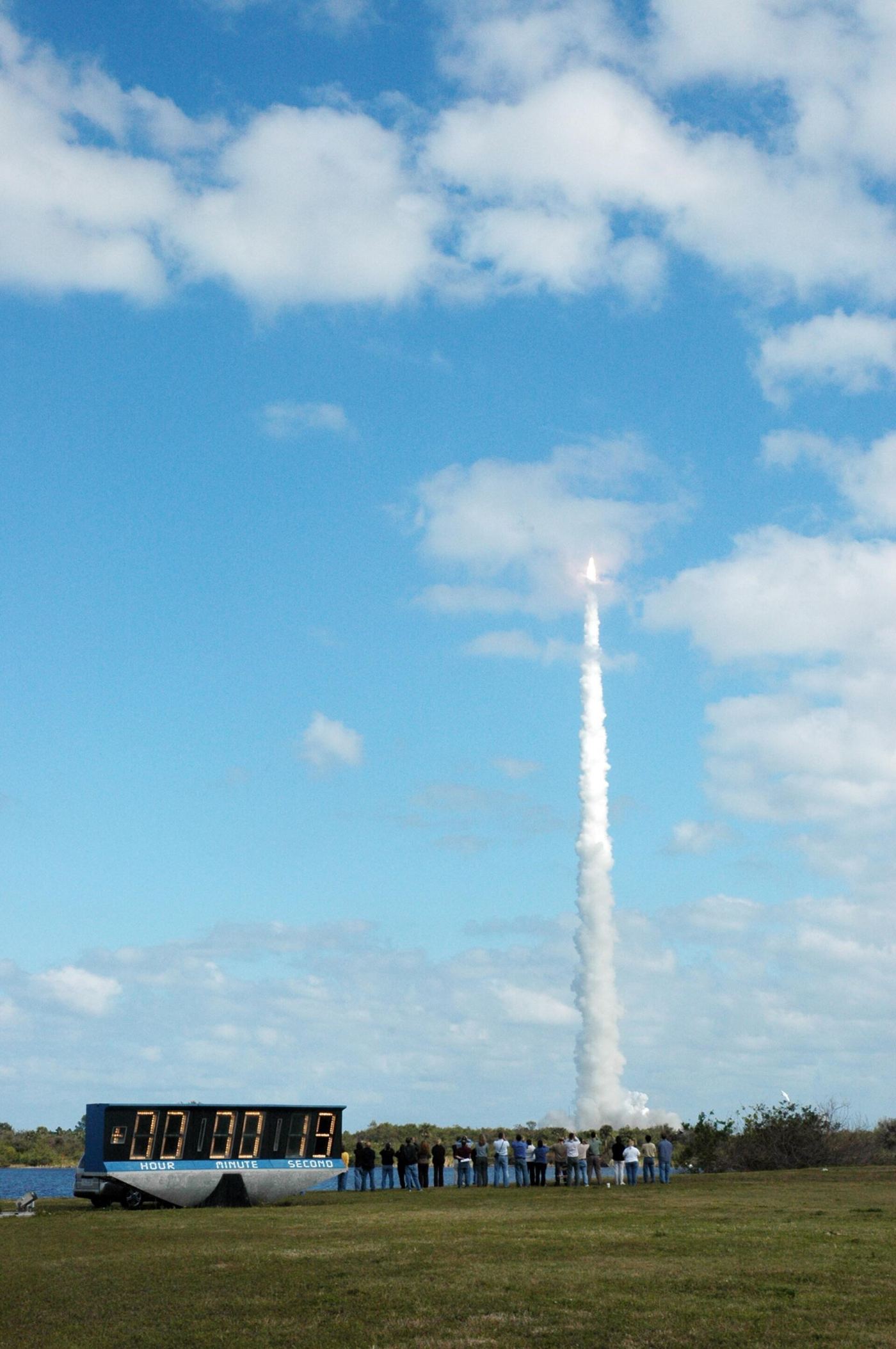
    A large NASA rocket lifts off from its launch pad beneath a bright sky, with clouds of smoke billowing below.

    Artemis II Rocket Tore Holes in Earth’s Ionosphere, Study Finds

    0
    By Drew Bennett on November 25, 2026 Business

    NASA’s Artemis II launch in April 2026 tore large holes in Earth’s ionosphere and disturbed GPS signals across the United States, according to a study reported in November 2026. Researchers from Taiwan’s National Cheng Kung University found three disturbances stretching about 3,100 miles, or 5,000 kilometres, across North America. The effects were up to 10 times more intense than those seen after SpaceX Starship test launches, despite Starship having roughly twice the liftoff thrust of NASA’s Space Launch System rocket. Ground stations detected changes in electron density equivalent to positioning errors of several metres. The ionosphere is an electrically charged region of the upper atmosphere that plays an important role in radio communication and satellite-based navigation, so disturbances there can ripple into everyday technologies far beyond spaceflight itself.

    What the Evidence Shows

    The first disturbance followed the 65-metre core stage after liftoff on 1 April 2026, at the start of the crewed nine-day flight around the Moon. Two more followed upper-stage engine burns, about two hours later and more than 24 hours after launch. Co-author Charles Lin warned that even small positioning errors could affect autonomous vehicles that rely on GPS data. The study, reported by Space.com on 4 November, recorded no GPS outage or navigation failure. As a preprint, its conclusions remain provisional. The researchers also noted that the disturbances were far greater than those recorded during previous rocket launches, raising questions about how future heavy-lift missions should be planned alongside the growing use of GPS-dependent systems on the ground. Reporting and analysis from sources such as NASA track the same developments, and specialists following the Artemis II ionosphere disturbances say the direction is now consistent across independent lines of evidence.

    The Wider Context

    Funding bodies are watching the Artemis II ionosphere disturbances closely because the work sits at the junction of basic curiosity and practical return. Grant panels increasingly ask for a path from discovery to application, while researchers push back that the most valuable uses of fundamental science are rarely the ones written into the original proposal. The tension is productive when both sides stay honest about timescales.

    What Happens Next

    The long view on the Artemis II ionosphere disturbances is that fields advance by accumulation rather than by single announcements. This result adds a solid, checkable piece to a structure many teams are building, and its authors have shared their data so the piece can be tested from every side. That is how the picture eventually becomes reliable enough to act on. You can follow related developments in our coverage of science.

    It is also worth remembering how quickly the picture in this area has changed before. Positions that looked settled a few years ago have been revised as new data arrived, and the same humility is appropriate now. The strongest coverage of this subject, and the most useful advice, tends to come from sources that update their views openly when the facts move, rather than defending an earlier position long after it has stopped fitting the evidence available.

    Artemis II GPS ionosphere
    Drew Bennett

    Related Posts

    A New Imaging Method Maps the Immune System’s Antibody Cells in Tissue

    Glass Stretched One Atom Wide Lets Heat Flow in Quantum Steps

    Two New Bandicoot Species Found After a Decade in Museum Drawers

    Leave A Reply Cancel Reply

    Search
    Recent Posts
    November 25, 2026

    Leisure Exercise Cuts Dementia Risk, but Hard Work May Not Help

    November 25, 2026

    Artemis II Rocket Tore Holes in Earth’s Ionosphere, Study Finds

    November 24, 2026

    A New Imaging Method Maps the Immune System’s Antibody Cells in Tissue

    November 24, 2026

    Alzheimer’s Blood Tests Now Available After FDA Clearance

    November 23, 2026

    NHS Faces Winter Crisis as Record A&E Delays Hit Before Flu Season

    November 23, 2026

    Glass Stretched One Atom Wide Lets Heat Flow in Quantum Steps

    About Us

    InformeVagas delivers expert insights covering Technology, Business, Health, Cryptocurrency, Cybersecurity, Guides.

    Gain updates, trends, tips, strategies, innovations, solutions, risks. Empower decision-making, boost awareness, track progress, explore opportunities, decode challenges. #InformeVagas

    Popular Posts
    November 25, 2026

    Leisure Exercise Cuts Dementia Risk, but Hard Work May Not Help

    November 25, 2026

    Artemis II Rocket Tore Holes in Earth’s Ionosphere, Study Finds

    November 24, 2026

    A New Imaging Method Maps the Immune System’s Antibody Cells in Tissue

    Contact Us

    We appreciate your feedback! If you have a question, need assistance, or would like to connect, please don’t hesitate to reach out. Our team is always here to help you.

    Email: [email protected]
    Phone: +62 823 19299387

    Address: 757 Coffman Alley
    Elizabethtown, KY 42701

    Copyright © 2026 | All Rights Reserved | InformeVagas
    • About Us
    • Contact Us
    • Disclaimer
    • Privacy Policy
    • Terms and Conditions
    • Write For Us
    • Sitemap

    Type above and press Enter to search. Press Esc to cancel.

    WhatsApp us