
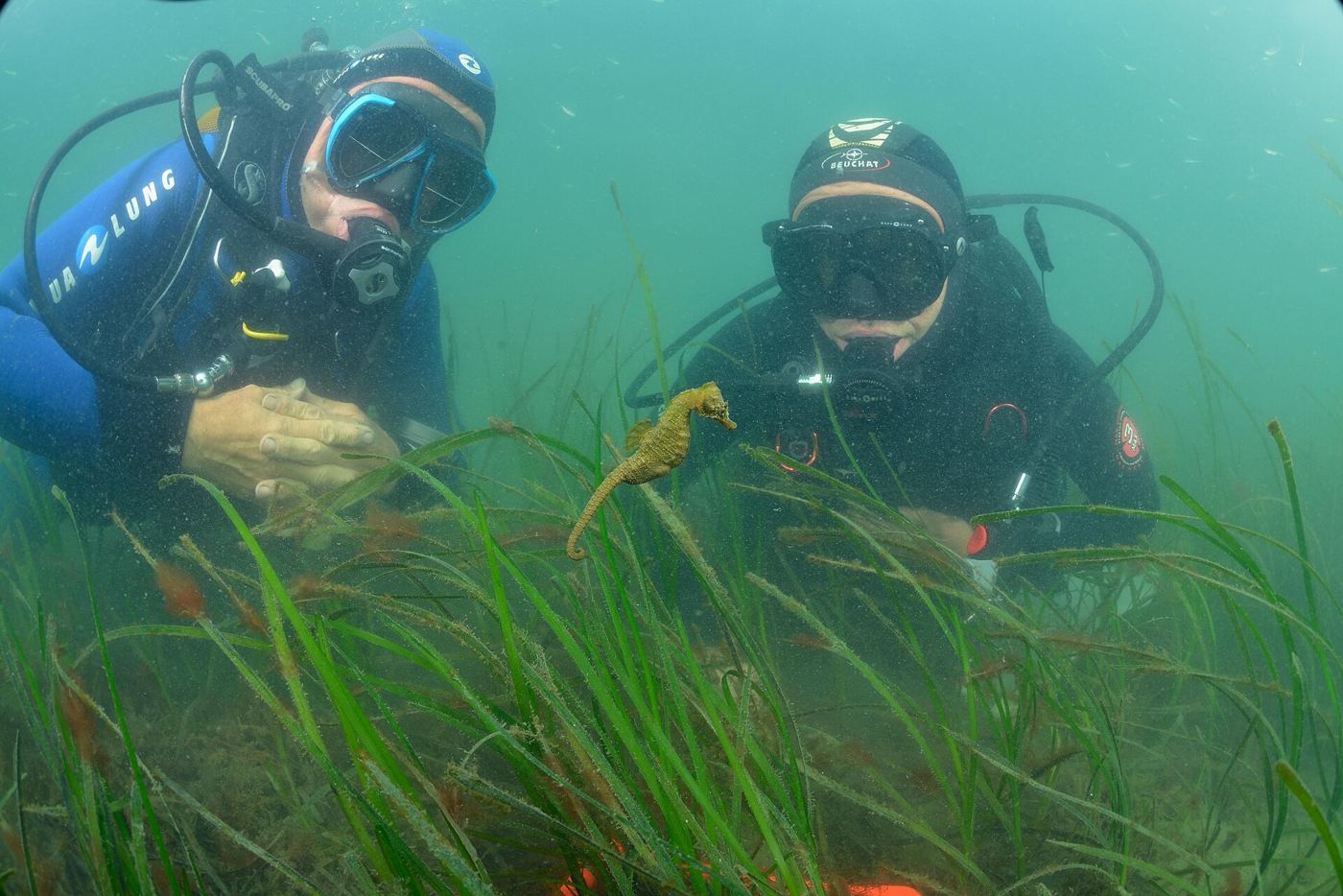
Beneath shallow coastal waters, in places where sunlight still reaches the seabed, meadows of seagrass sway in the current. Seagrass is not seaweed: it is a true flowering plant that returned to the sea millions of years ago, with roots, leaves and flowers that bloom underwater. Its meadows are nurseries for the ocean, sheltering young fish, seahorses, turtles and crabs among the blades while they grow too large to be easy prey. A single hectare of seagrass can support thousands of animals, and the meadows also hold the seabed together, calming waves and keeping the water clear. They grow in warm and cool seas alike, from tropical lagoons to the coasts of northern Europe, and they are among the most productive habitats on the planet.
What the Evidence Shows
Seagrass meadows do quiet work that matters far beyond the shore. They store carbon in the mud beneath them, locking it away for centuries, and they filter the water, trapping sediments and nutrients that would otherwise cloud the sea. Yet these meadows are shrinking fast, damaged by dredging, boat anchors, pollution and coastal building. Scientists estimate that large areas have already been lost, and with them the fish nurseries and the carbon stores they held. Restoration projects now replant seagrass by hand, scattering seeds or transplanting shoots, and the young meadows can recover surprisingly quickly when the water is clean. Protecting the meadows that remain is one of the simplest ways to help both coastal wildlife and the climate at the same time. Reporting and analysis from sources such as NASA track the same developments, and specialists following the seagrass meadows sheltering young fish say the direction is now consistent across independent lines of evidence.
The Wider Context
Funding bodies are watching the seagrass meadows sheltering young fish closely because the work sits at the junction of basic curiosity and practical return. Grant panels increasingly ask for a path from discovery to application, while researchers push back that the most valuable uses of fundamental science are rarely the ones written into the original proposal. The tension is productive when both sides stay honest about timescales.
What Happens Next
The long view on the seagrass meadows sheltering young fish is that fields advance by accumulation rather than by single announcements. This result adds a solid, checkable piece to a structure many teams are building, and its authors have shared their data so the piece can be tested from every side. That is how the picture eventually becomes reliable enough to act on. You can follow related developments in our coverage of science.
It is also worth remembering how quickly the picture in this area has changed before. Positions that looked settled a few years ago have been revised as new data arrived, and the same humility is appropriate now. The strongest coverage of this subject, and the most useful advice, tends to come from sources that update their views openly when the facts move, rather than defending an earlier position long after it has stopped fitting the evidence available.
