
Social engineering attacks are one of the most common and dangerous forms of cybercrime in today’s digital world. Unlike technical hacking methods that rely on exploiting software vulnerabilities to break into systems, social engineering focuses on manipulating people. Attackers exploit human psychology, such as trust, fear, curiosity, or urgency, to trick individuals into revealing sensitive information, clicking on malicious links, or granting unauthorized access to systems.
These attacks can take many forms, including phishing emails, fake phone calls (vishing), deceptive text messages (smishing), impersonation, and baiting schemes. For example, an attacker may pose as a trusted company representative and request login credentials, or send an urgent message claiming an account has been compromised to pressure the victim into acting quickly without thinking.
What Are Social Engineering Attacks?
Social engineering attacks are manipulation techniques used by cybercriminals to trick individuals into revealing confidential information. This information may include passwords, banking details, personal identity data, or access credentials.
Instead of hacking systems using coding skills, attackers “hack humans.” They pretend to be trusted sources such as bank representatives, company IT staff, delivery services, or even friends. Their goal is to gain trust quickly and push the victim to act without verification.
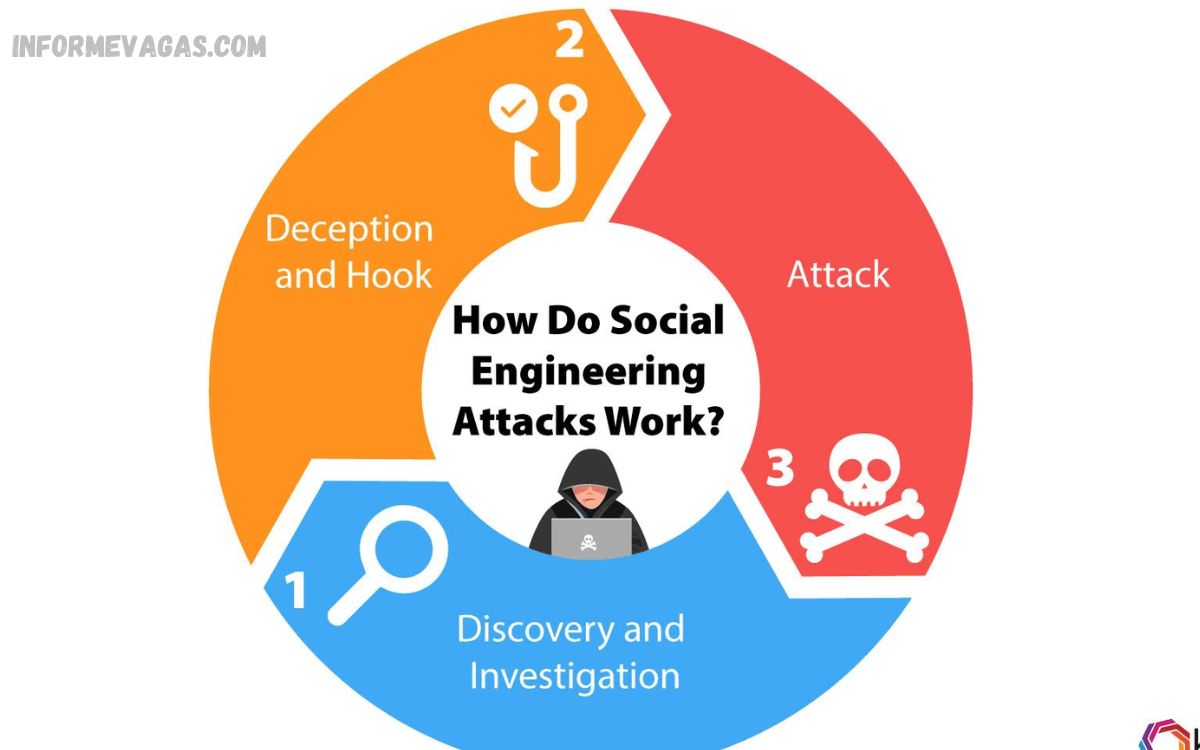
How Social Engineering Works
Social engineering attacks follow a simple but effective process:
1. Research Phase
Attackers gather information about the target. This may include social media profiles, company details, email addresses, or phone numbers.
2. Hook Creation
They design a message or scenario that looks legitimate. It may appear urgent, helpful, or threatening.
3. Interaction
The attacker contacts the victim through email, phone call, text message, or fake websites.
4. Manipulation
Psychological tricks are used to influence the victim. Common triggers include fear of account suspension, reward offers, or authority pressure.
5. Action
The victim unknowingly shares sensitive data or clicks a malicious link.
6. Exploitation
The attacker uses the stolen information for fraud, identity theft, or system access.
Types of Social Engineering Attacks
Understanding different types is important in Social Engineering Attacks Explained because each method uses different techniques.
1. Phishing Attacks
Phishing is the most common type. Attackers send fake emails or messages that look real. These messages often contain malicious links or request login details.
Example: A fake email from a bank asking to verify account information.
2. Spear Phishing
This is a targeted phishing attack. The attacker customizes messages for a specific person or organization. It appears more realistic because it uses personal information.
3. Vishing (Voice Phishing)
In vishing, attackers call victims pretending to be bank agents, IT support, or government officials. They create urgency and pressure victims to share OTPs or passwords.
4. Smishing (SMS Phishing)
Smishing uses text messages to trick users. These messages often include fake delivery updates, prize notifications, or account alerts.
5. Pretexting
In this method, attackers create a fake identity or scenario to gain trust. They may pretend to be auditors, HR staff, or technical support.
6. Baiting
Baiting involves offering something attractive such as free downloads, movies, or software. Once the victim interacts, malware is installed on their device.
7. Tailgating
Tailgating happens in physical security. An attacker follows an authorized person into a restricted area without permission.
8. Quid Pro Quo
In this attack, the hacker offers a service or benefit in exchange for information. For example, fake tech support offering free assistance.
Read Also: Blockchain Technology Applications
Real-World Examples of Social Engineering
Social engineering attacks are widely used in cybercrime cases around the world.
- Fake bank emails requesting a password reset
- Fraud calls pretending to be government tax officers
- Fake job offers asking for personal documents
- Fake social media messages from “friends” asking for money
- Malicious links shared through messaging apps
These examples show how attackers exploit trust in daily communication channels.
Why Social Engineering Is Effective?
Social Engineering Attacks Explained works best because it targets human psychology instead of technology.
Key reasons include:
- People trust familiar-looking messages
- Urgency creates panic decisions
- Lack of cybersecurity awareness
- Overconfidence in digital communication
- Emotional manipulation (fear, greed, curiosity)
Even advanced security systems cannot prevent a user from voluntarily disclosing information.
Impact of Social Engineering Attacks
The consequences of social engineering attacks can be severe.
1. Financial Loss
Victims may lose money directly from bank accounts or through fraud transactions.
2. Identity Theft
Stolen personal data can be used to open fake accounts or commit fraud.
3. Data Breaches
Companies may lose sensitive business data, customer records, or trade secrets.
4. Reputation Damage
Organizations can lose trust from clients and partners after a breach.
5. Operational Disruption
Attacks may cause system downtime and business interruption.
Warning Signs of Social Engineering Attacks
Recognizing warning signs is essential for protection.
- Urgent requests for sensitive data
- Emails from unknown or suspicious addresses
- Poor grammar or unusual formatting
- Requests for OTP or passwords
- Fake links that look similar to real websites
- Pressure to act quickly without verification
Being alert to these signs can prevent most attacks.
Prevention Strategies
Preventing social engineering requires awareness and discipline.
1. Verify Identity
Always confirm requests through official channels before sharing information.
2. Avoid Clicking Unknown Links
Do not open suspicious links or attachments.
3. Use Multi-Factor Authentication
Enable extra security layers for accounts.
4. Security Training
Organizations should train employees regularly about cyber threats.
5. Strong Password Practices
Use unique and complex passwords for different accounts.
6. Limit Information Sharing
Avoid sharing personal or sensitive data on public platforms.
7. Update Software Regularly
Keep systems updated to reduce vulnerability risks.
Role of Cybersecurity Awareness
Cybersecurity awareness is the strongest defense against social engineering. When users understand how attackers operate, they become less likely to fall for manipulation.
Organizations should build a culture of security where employees question unexpected requests and verify all communication. Awareness campaigns, training sessions, and simulated phishing tests can significantly reduce risks.
Future of Social Engineering Attacks
Social engineering is evolving with technology. Artificial intelligence is now used to create more convincing fake messages, voice cloning, and deepfake videos.
This makes attacks harder to detect. As technology improves, human awareness becomes even more important. Future cybersecurity will rely heavily on behavior-based defense and continuous education.
Frequently Asked Questions
How does phishing work?
Phishing works by sending fake emails or messages that look real. These messages trick users into clicking on malicious links or entering login credentials on fake websites.
Who are the main targets of social engineering attacks?
Anyone can be a target, including individuals, employees, businesses, government organizations, and even high-level executives.
How can I identify a social engineering attack?
Warning signs include urgent messages, unknown senders, suspicious links, requests for sensitive data, and poor grammar or unusual communication style.
What should I do if I receive a suspicious message?
Do not click any links or share information. Verify the message through official contact channels before taking any action.
Can antivirus software stop social engineering attacks?
No, antivirus software cannot fully stop these attacks because they rely on human behavior rather than technical system vulnerabilities.
How can organizations prevent social engineering attacks?
Organizations can prevent attacks by training employees, using multi-factor authentication, conducting phishing simulations, and enforcing strong security policies.
What is the best defense against social engineering attacks?
The best defense is awareness. Understanding how attackers operate and always verifying requests before sharing information is the most effective protection.
Conclusion
Social Engineering Attacks Explained highlights a major cybersecurity challenge where human psychology becomes the target. These attacks do not depend on breaking systems but on manipulating trust and behavior.
Understanding types, methods, and warning signs helps individuals and organizations protect themselves effectively. Prevention depends on awareness, verification, and strong security practices.
